
O is for Orientation
Part two of a four-part mini-series anticipating the coming year 2026 A.D. (plus a free meme)

By way of an introduction, this year, I would like to try out something new in the next couple of days to celebrate the occasion and to extend an invitation to you to weigh in on my snark.
Hence, the next couple (four) of postings will be thematically as follows:
Observation: where do we stand at the end of 2025 in terms of geopolitics, public health (sic), and personal matters?
Orientation: with concise yet accurate information, let us try to orient in the seemingly endless chaotic mess we find ourselves in
Decision: it’s only-ever possible to make good (right) decisions if properly informed, but one still has to decide on this or that course of…
Action: don’t mull over this or that, once a decision has been made, act
Needless to say, this is a classic four-part series deriving from what’s known as the OODA loop.
Be that as it may, here’s why I’m doing this: it’s a series of thought-experiments designed to help me organise my thinking and the four essays will be short enough to (hopefully) serve you as food for thought, too.
Hence, let’s get started, shall we?
O is for Orientation
First of all, let’s all agree on not doing stupid things, such as feeding the bureaucratic monstrosities running things.
That means not to pay more than one absolutely has to (I’m all for lower taxes and way less gov’t, but this isn’t a philosophical treatise): do you own taxes, make sure you pay as little as possible, and try to avoid paying extra by, say, getting speeding or parking tickets.
Taxes are the primary control lever, with fees (incl. for mortgages) included, by which they™ control the likes of you and me.
The most important thing is to get out of debt, and if you don’t owe a bank or the gov’t anything, that’s great; if there are outstanding obligations, work tirelessly towards reducing and, in the best case, getting rid of them.
(As an aside, the most rapidly depreciating asset there is—is a car; don’t buy them on credit, if possible, for they are a lose-lose thing.)
As to what else to do, the most important thing is to assess where you are: will things get better or don’t in case of major disruptions? Here, a critical glance is merited: urban situations provide for more order in bad situations because they are more important than, say, Main Street Anyplace; yet, cities and esp. suburbs can be pretty dangerous places if there’s a sustained, widespread, and major disruption, esp. for women, children, and seniors.
It’s perhaps more important to be on o.k.-ish to good relations with your immediate neighbours irrespective of where you are (city vs. countryside, condo vs. detached house), esp. if you’re a bit better prepared than them; if there are major disruptions, be ready to share with your neighbours (for if they come asking and you refuse to share, they’ll turn into something else).
Moving on to societal aspects, if we were to presume a difficult year ahead—we already know that the quagmire in/over Ukraine isn’t over and we learned that, if pushed hard enough, the US would bomb Iran; there’s no way these lessons of 2025 won’t hold for next year.
Absent all-out nuclear war (which means most of these considerations being moot), there’s a ton of things that can go wrong, with the most likely outcome being supply disruptions.
(As an aside, let’s note that, e.g., prices for natural gas have come down to pre-February 2022 levels, yet prices for everything haven’t.)
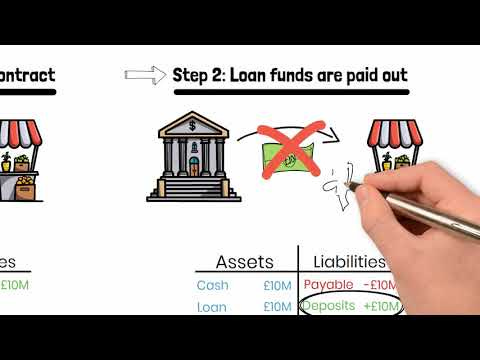
Having a steady income is a priority, as is being aware of new and more intrusive income reporting/disclosure standards taking effect next week:
Yet there’s another thing (the below three paragraphs are from yesterday’s piece linked at the top of today’s posting)
Reducing the potential harm flying your family’s direction isn’t prepping™; it’s adult, rational behaviour in anticipation of gov’t turning ever more openly into an extortion racket that demands that you bend the knee in exchange.
For most of the human past, death and taxes were the only certainties; these days, the observation is inescapable that gov’ts and bureaucrats are adding another one: you ‘liking’ being bullied by them.
While, for sure, this is a performative practice to begin with (once the consent of the governed is anticipated due to sanctions or other threats for non-performance), but it’s the road to serfdom.
While a lot of these extra forms to fill are, without doubt, both an exercise in futility and a less-than-hidden nudge™ from the powers-that-be, esp. since the proverbial powers-that-be like pushing you and me around.
Why would the gov’t, esp. one of, for, and by the people, do that?
You see, bureaucracy literally means ‘rule of the (office) desk’, and those who sit at these desks like you to be trying to catch up with all the do’s and don’ts they put up around you and me, if only to make you so busy doing this and filling out that form—in order to prevent you from stopping for a moment and think for yourself.
It works like a charm: activity is they main, if self-serving, reaction bureaucracy wishes to entice, for if you or I would switch into action mode, it’s pretty much game over for these bureaucracies.
And it doesn’t take a lot of effort to be obnoxious to the point of making a ruckus to throw a bit of sand into these machines; but remember, doing so means you must be prepared, for the most confounding thing you can do is—throw some otherwise unknown rule at an otherwise flabbergasted bureaucrat or low-level enforcer.
And keep in mind to ‘do unto others as you would have them do unto you’, for leadership requires action and the willingness to endure.

So, reading suggestions for appropriate behaviour include Václav Havel’s ‘The Power of the Powerless’ (1978) and, of course, the recognition that the purpose of any action is—to trigger a, if not the desired, reaction.
So, what’s the reaction to, say, the gov’t randomly denying people to travel abroad without digital ID and a multi-step S.M.A.R.T. phone app that will enable machine-controlled (‘automated’) passport/travel document checks?

It is, of course, to always not use such apps, digital tickets, etc., but note that non-digital documents are phased out in 2026/27, as per this IATA/IACO website.
So, the most appropriate reaction is to not read newspapers or websites, but to go directly to the source, e.g., whatever federal/gov’t registry, company website, etc. exists. It’s of course a good idea to also read up on what legacy media publishes, but that’s mainly to be able to determine how big a gap between fact and fiction there is.
Make sure, too, if you need to require new passports or the like that you renew them in good time to avoid these documents being made conditional on, say, biometric and other data inputs, you holding a different gov’t issued (digital) ID or the like. Also, fees will continue to climb, so, keep an eye on these things.
As virtually all gov’t-sponsored welfare and subsidy programs are basically insolvent—as are most (esp. Western) gov’ts, it is a good idea to de-couple from these programs as much as possible. If you’re dependent on these transfer programs, you’re not free to disagree with the gov’t once they start pushing you around (same basic principle as with debt).
The law™, of course, is as flexible as ever, esp. if it comes down to you being hauled in front of a judge, or, worse, you being administratively censured.
So, on this Christmas Day 2025, here’s a key list of important things to remember:
Do not comply.
If you’re in a position to refuse any opt-in, do so.
If that means your life will become a tad more uncomfortable, it’s arguably a small price to pay to hold on to the simmering embers of liberty and freedom.
Every step towards acceding to these psychopathic plans and shenanigans—which are, make no mistake, clear to see—reduces your personal freedom and the possibility of your children and grandchildren ever getting to know that feeling.
Freedom is every man’s and every woman’s birthright.
One cannot relinquish that with which one was born.
One can but give it up on one’s own volition.
The great sorting is here, dear readers: compliance is slavery.
Non-compliance is everyone’s only choice.
Stay strong.
For the rest of where this came from, please see here.
Do spread these cheerful vibes to your loved ones.
Be that grumpy brother/uncle/sister/aunt and ‘spoil’ the seasonal fakery by making a point.
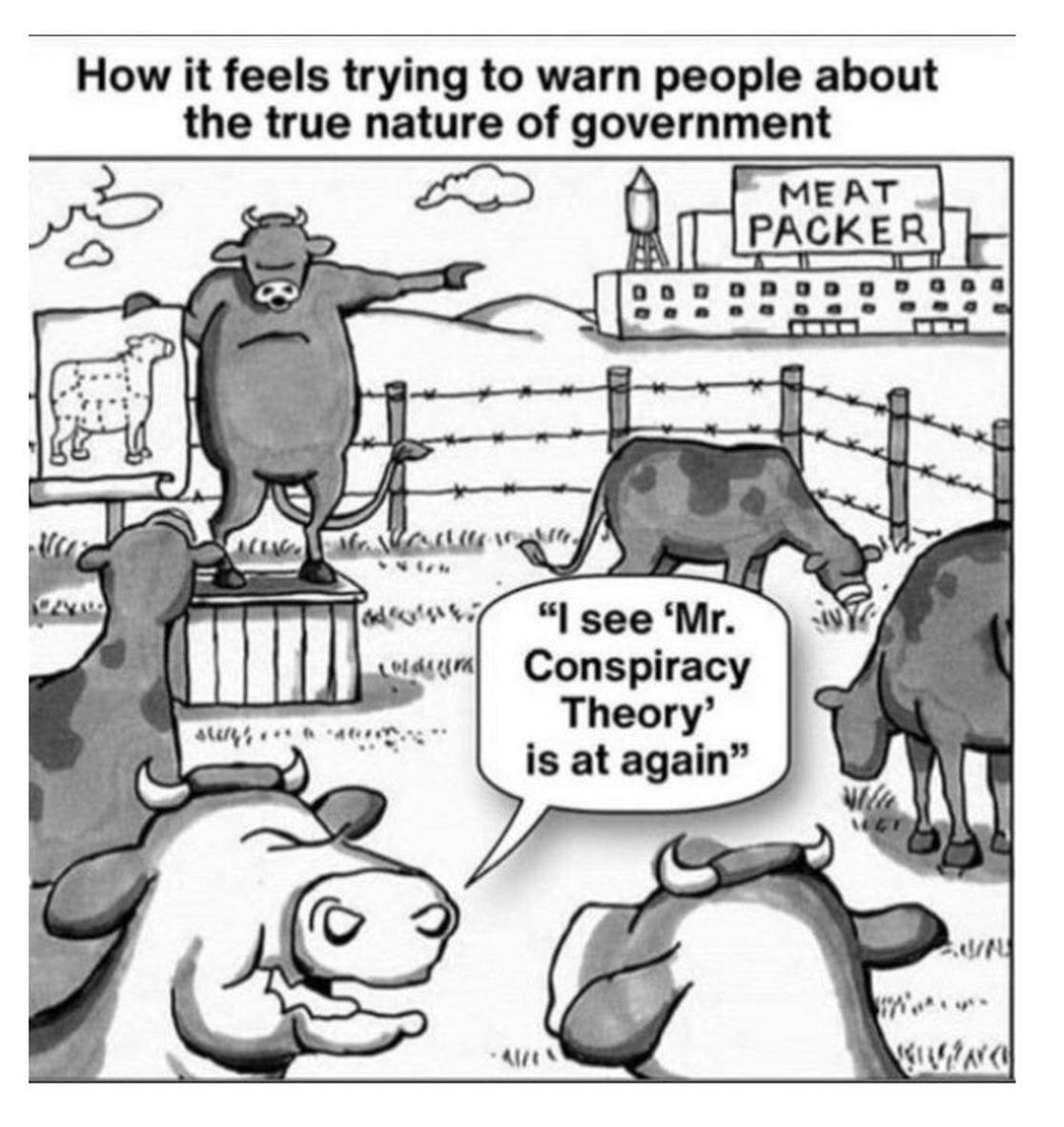
Short of time to write more but love your mini-series ☃️
Sad thing is, you can be in the right legally and rules-wise and even praxis-wise and the bureaucrat can still say "No", and you can take them to court for appeal and review, and get the court to say you were right all along, and the bureaucrat still says "No", forcing you to go to court again and again.
Becuase: if the bureaucrat has political protection, and/or the case is political, then what the law says and what the court says is immaterial to reality; the state's bureaucrats and goons (aka police) will obey orders from their bosses, all the way from the top.
And even if you win all the way and even if you're awarded damages, they will still get you any which way they can:
Social Services/Child Protection Services investigating your family
Psychiatric evaluation as ordered by court
Public insurance/welfare suddenly stops working
Police start pulling you over/stopping you for inspection whenever they see you
Blacklisting re: career, social circles
Audits
And of course, as happened to a Swedish nurse that was decreed a "right-wing nationalist racist and conspiracy-theorist" by state media at the height of Covid, for her questioning the eifficiency of mRNA-vaccinations:
She won her defamation suit against state media.
And then the state court ruled that since she had brought the suit, despite her winning and against legal praxis (but the law, technically speaking) she had to pay for the state media company's legal costs.
She was awarded ca 150 000:- in damages (ca $15 000 for those unfamiliar with SEK). And is supposed to pay millions in legal fees for the state media's lawyers, who presented their bills after the fact.
And they sicced CPR on her, and they tried to revoke her license to practice as an RN.
She had to emigrate to Finland for it to stop.
I bring her up because that is the price, under "soft totalitarianism", of resisting and being succesful at it. I could also mention Karl Hedin who was framed by police and prosecutor, them having coerced a false witness to plant evidence in Hedin's clothing and home. It all came out, and... Hedin has received no damages, no apologies.
And the two police and the prosecutor are still working - the investigation against them was simply dropped due to the matter being ruled not serious enough.
That's the reality of it - as Havel well knew. That is the cost one may face.
Being free isn't free.