
'Anxiety Disorders and Depression: the Psyche as an Important Factor in Heat'
'Experts say that heat is an underestimated health risk, not least in terms of the psychological effects of the sweat-inducing temperatures.' ∽ Austrian state broadcaster ORF, 27 June 2025

Today it’s time for another update on—rather: well beyond—the frontiers of sanity, clarity, and, yes, language. Today’s posting does relate, however imperfectly, to these earlier ones:


Both are pertinent insofar as the former opens with the amazing quote I used for the subtitle of this posting; the latter cites an expert™, no less, who muses thus:
How cold the weather conditions actually feel depends on individual comfort and physical condition …
In summer, on the other hand, humidity, along with the intensity of the sun’s radiation and the wind, is one of the main factors in how hot the weather feels. Then the rule is: the higher the humidity, the more people suffer from the heat.
Believe it or not, I’m told by reliable sources™ that warm air holds more moisture than cold air, though I’ve never been to the tropics to verify (a few visits to botanical collections—glass houses—in temperate climes sufficed).
Setting aside these barely relevant things, such as basic physics, today I have another seasonal specialty for you, dear readers, and I’m pretty sure you’ll first be amazed by the following content, which will, I dare to presume, inevitably followed by head-scratching as to, ‘how TF did this end up on the website of a state broadcaster?’.
Note that, while not un-true, there’s a ton of these mental gymnastics there—and elsewhere in legacy media—with respect to, say, Covid, Russia! Russia! Russia! (I’m telling you), Iran, Israel, Gaza, poison/death juices, climatology™, and many other things: it’s not merely the mental aspect here that’s amazing, but rather the fact that society is growing increasingly numb—Yuri Bezmenov would call this ‘demoralised’—to this kind of abuse (see below the piece).
Translation, emphases, and [snark] mine.
Anxiety Disorders and Depression: the Psyche as an Important Factor in Heat
The summer so far has been difficult for many. The extreme temperatures in many places—like on Monday [3 Aug. 2026], it is expected to reach temperatures of up to 39 or 40 degrees on Tuesday [4 Aug. 2026]—are once again causing great concern for many people. The persistent heat not only puts a strain on the body, but also on the psyche. People with anxiety disorders, depression, or other mental illnesses in particular suffer more from this, as environmental psychologist Daniela Renn explains [we’re all equal, right? Right].
By Florian Amelin, ORF.at, 3 Aug. 2026 [source; archived]
The psychological consequences of heat are significantly greater than many people realise, the environmental psychologist and board member of the Professional Association of Austrian Psychologists (BÖP) tells ORF.at: ‘Heat is a significant physical and psychological burden for many people, as it directly affects our stamina, attention and concentration’, says Renn [cap’n obvious to the rescue].
Fatigue, exhaustion, and attention problems are only the immediate consequences. It will be particularly stressful for people who have previously suffered from anxiety disorders, panic attacks, or depression. Heat can make this even worse, says Renn [somehow and somewhere, quite recently, I’ve heard that kind of swan song before … now, if I could only remember

Ah, that was it: what a bizarre coincidence, eh? Honi qui pense y mal …]
‘Feeling of being helpless in a situation’
Heat can cause exactly the physical symptoms that many people with anxiety disorders know as warning signs [whatever TF happened to the ‘we are the science’ crowd chanting ‘correlation ≠ causation’, by the way?]: racing heart, dizziness, sweating, and the feeling of no longer being able to perform. What for most people is a normal reaction of the body to high temperatures can trigger a spiral of anxiety in those affected [here, once again, comes the attempted normalisation of mental illness as something that must be acknowledged, celebrated—‘neurodiversity’ (Wikipedia), anyone?—and soon everybody who isn’t will be labelled racist, White™, a supporter of the patriarchy, and, of course, literally worse than Hitler].

‘Many fears have their origins in the feeling of being helpless in a situation’, explains Renn. Many people would then worry that they would no longer be able to cope with everyday life, be it at work, in family life or with regard to their own health. Particularly in the case of panic disorders, a real vicious circle can arise: the heat causes physical discomfort, which is interpreted as a danger and the fear in turn increases the physical tension [I’m going out on a limb here, but what if ‘mental illness’ is a form of evolutionary beneficial trait, as hypothesised by Jared Edward Reser].
‘Everything is harder’
Studies also show that extreme heat can exacerbate existing psychological problems. According to a study published in the European Journal of Public Health in 2021, the risk of psychological stress and certain mental illnesses increases at higher temperatures.
The connection between extreme heat and the diseases schizophrenia and dementia has been well studied [which isn’t the same as well-understood; to make this point, all one needs to do is read the methodology section of the referenced paper: ‘We performed random effects meta-analysis to summarize the relative risks (RRs) in mental health outcomes per 1 °C increase in temperature, and under different heatwaves definitions.’ Pick and chose, dear readers, is what they did (which is, of course, different from cherry-picking data); plus there’s a whole range of limitations, most importantly the following:
‘grey literature and publications in languages other than English were not included’ (talk ‘bout navel-gazing for a moment)
‘the higher pooled RR found in middle-income countries need to be interpreted carefully given the limited number of studies in such countries’ (nobody really cares enough about asking poor people about their feelings)
My personal favourite, though, are these limitations (lol, sic):
The studies reviewed may not be an indication of the true prevalence of clinically significant mental disorders which may be underestimated worldwide due to the constraints of current diagnostic criteria (Kessler et al., 2009), and the under-investigated complex aetiology of mental health problems (Page and Howard, 2010, Vigo et al., 2016).
Exposure measurements cannot be used to accurately gauge the temperature exposure at an individual level and the link to high indoor temperatures (Thompson et al., 2018).
Other unaccounted for environmental exposures correlated with high temperatures (such as solar radiation and high ozone concentrations) may adversely affect mental health (Thompson et al., 2018, Qi et al., 2015, Bernardini et al., 2019). Therefore, we could not exclude other potential unlisted confounding factors that might be associated with both high temperatures and mental health outcomes.
But, sure, the Science™ for the win]. People with these conditions are more likely to need hospital treatment during heatwaves [however this may be deduced from the above-related paper is beyond me, but whatever at this point, esp. as the majority of the 34 papers in the above-reference ‘meta review’ lean heavily on observational studies]. Thus Renn:
Pre-existing symptoms often increase significantly during hot periods. The number of people seeking inpatient help also increases accordingly.
People with depression also often suffer more from prolonged heat, although the data here is less clear. According to Renn, those affected often withdraw even more because they lack energy and even everyday activities become a burden. ‘Everything is harder’, says the psychologist [which is how the Egyptians built the pyramids, right?].
Worry About the Next Heat Wave
Social pressure can also play a role. While images of vacation, swimming lakes and warm summer evenings dominate social networks, some people feel downright paralysed by the heat. The feeling of having to ‘enjoy’ the summer can create additional stress and worsen existing psychological problems.
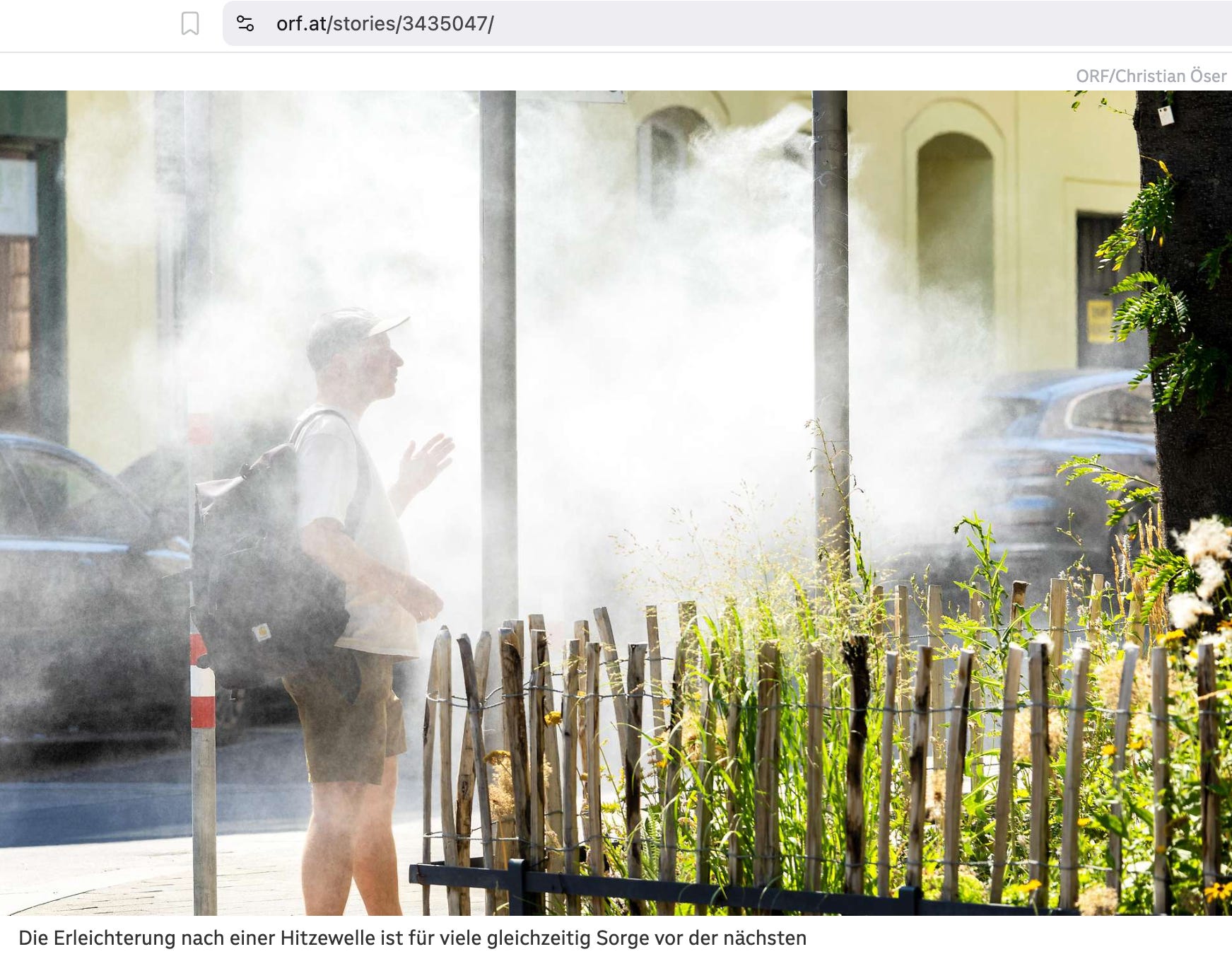
For many, the stress doesn’t end when they cool down. Instead of relief, there is still concern about when the next heat wave will come. According to Renn, the acute stress caused by the heat and the fear of even hotter summers ‘go hand in hand’. The psychologist speaks of a feeling of ‘being at the mercy’ [of summer, which never existed in the annals of mankind before 2026, mind you].
Anyone who experiences temperatures rising earlier in the year due to man-made climate change and heat waves lasting longer may develop the feeling of losing control over the situation [we’re all in this together]. People who have already had bad experiences with extreme heat, for example in the form of health problems or panic attacks, are particularly affected [and nobody is safe, unless everybody is safe, as per this memorable, if badly-aged, piece of agit-prop from the golden days of early December 2020 (archived)].
Increasing Sick-Leave Rates
Renn also observes that the self-employed are a particularly vulnerable group. They are more likely to worry that they will no longer be able to perform due to the heat and, unlike employed workers, will be unable to afford sick leave [never mind that this is a feature unrelated to heat] But the number of sick days also increases significantly as the heat continues.
According to a preprint from the Potsdam Institute for Climate Impact Research [which is a gov’t-sponsored think tank], an average hot day with temperatures above 30 degrees leads to a 3.5 per cent increase in sick leave reports. After a week-long heat wave, this value even rises to more than ten per cent. However, the numbers refer to Germany [and they also found, amazingly, two other key aspects omitted here: those with physically more demanding jobs are at increased risk (not those with white-collar jobs in air-conditioned offices1); plus there is the entirely laughable argument™ that ‘heat waves can trigger new, incisive health shocks with long-lasting impairments of workers’ health and ability to work, such as strokes’ (I kid you not), plus ‘by temporally exacerbating symptoms that prompt individuals to seek medical attention, heat waves may lead to the formal diagnosis of diseases that likely existed before, such as depressive disorders’, which in turn requires constant outlays thereafter (full quote in the foonote2): but, hey, the Science™].
Poor Sleep, Increased Irritability
The psychological consequences of the heat can also be seen elsewhere in everyday life [everything is psychological, do you see this now?]. Many people suffer from sleep problems during heat waves. According to a report by Gesundheit Österreich GmbH (GÖG), in the summer of 2025 one in three people in Austria slept worse due to the heat, and in 2024 the figure was even 60 per cent.
Poor sleep, in turn, has a direct impact on the psyche [no shit, Sherlock]. Concentration decreases, irritability increases, and emotional stress becomes more difficult to process. Further studies also indicate that on particularly hot days the willingness to be aggressive increases and the risk of self-harm and suicide also increases.
‘The counterpart of fear is control’
But a certain concern about extreme heat is not automatically a bad thing, emphasises Renn:
Worry focuses our attention on a challenge and helps us develop strategies to actively improve the situation.
It only becomes a problem when worry turns into permanent fear [no need to re-visit the previous paragraph, right? Right]. The most important counterpart to fear is the feeling of control. Anyone who feels like they can do something is less exposed to the situation.
This includes drinking enough water, shifting physical exertion to cooler hours of the day, and staying in cool rooms, if possible. You should also be careful with alcohol. The effect of medication could also change. In addition, a clear plan for hot days can also help. ‘As soon as I realise that I can do something, the fear goes away’, says Renn.
With more frequent and longer heat waves, the psychological stress caused by extreme temperatures is likely to become even more important in the future. The consequences of the heat are therefore not just a question of circulatory problems and heat strokes, but increasingly also a question of mental health, and therefore an issue that, according to experts, is still underestimated.
Bottom Lines
As painful as this was to read, including in particular the discussed papers etc., here’s the link to the resident expert’s professional-personal website.
Next up, the two main issues that I see here are the following:
once again, some papers say a thing or two, and legacy media treats it akin to revelation without using discernment; we’ve seen this before, and we’ll see this time and again (and I’ll give you a pertinent example below)
the fact that hot weather is an issue has been know well before the emergence of modern science, as the example of siesta in Mediterranean places clearly shows; what these papers, studies, and comments do, then, is little more than providing an expert-technocratic veneer to common sense to push something else
The weirdest shit that came to mind here, though, is something else: while I cannot remember where i first encountered the term and concept of ‘neurodiversity’—I think it was in an acquaintance’s rant about being thus on the job market over at LinkedIn several years ago—there may have been a ‘how it started’ point in time yet this is where we’re at now:
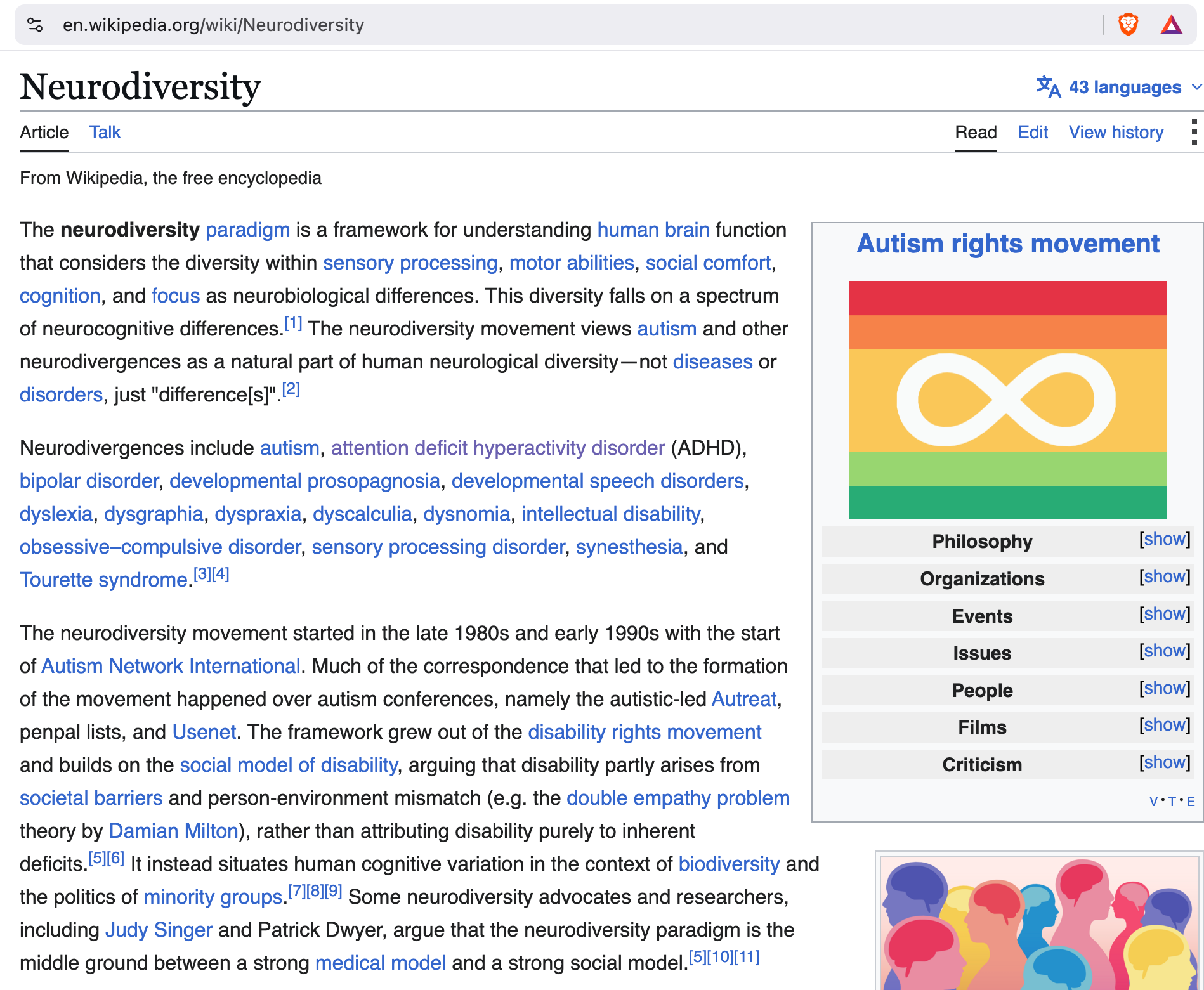
As to the prehistory of this ‘rights movement’ (sic), here are a few pertinent paragraphs that speak for themselves:
The word neurodiversity first appeared in publication in 1998, in an article by American journalist Harvey Blume,[27] as a portmanteau of the words neurological diversity, which had been used as early as 1996 in online spaces such as InLv to describe the growing concept of a natural diversity in humanity’s neurological expression.[6][28] The same year, it was published in Judy Singer‘s sociology honors thesis,[29][30] drawing on discussions on the independent living mailing list that included Blume.[31] Singer has described herself as “likely somewhere on the autistic spectrum“.[29]
Blume was an early advocate who predicted the role the Internet would play in fostering the international neurodiversity movement.[32] In a New York Times piece on June 30, 1997, Blume described the foundation of neurodiversity using the term neurological pluralism.[33] Some authors[34][35] also credit the earlier work of autistic advocate Jim Sinclair in laying the foundation for the movement. Sinclair’s 1993 speech “Don’t Mourn For Us” emphasized autism as a way of being, claiming “it is not possible to separate the person from the autism.”[36]
The neurodiversity movement grew largely from online interaction. The internet’s design lent well to the needs of many autistic people.[37] People socialized over listservs and IRCs. Some of the websites used for organizing in the neurodiversity movement’s early days include sites like Autistics.Org[38][39] and Autistic People Against Neuroleptic Abuse.[40][41] Core principles were developed from there. Principles such as advocating for the rights and autonomy of all people with brain disabilities with a focus on autism. The main conflicts from the beginning were about who the real experts on autism are, what causes autism, what interventions are appropriate, and who gets to call themselves autistic.[42] During the 2000s, people started blogs such as Mel Baggs‘ Ballastexistenz[43] and Kevin Leitch’s Left Brain Right Brain.[44] Eventually, Autistic Self Advocacy Network (ASAN) was started by Ari Ne’eman and Scott Robertson to further align the neurodiversity movement with the greater disability rights movement. ASAN led the Ransom Notes Campaign[45][46] to successfully remove stigmatizing disability ads posted by the NYU Child Study Center. This was a massive turning point for the neurodiversity movement.[47]
From there, the neurodiversity movement continued to grow with the formation of more organizations in the early 2010s such as Autistic Women & Nonbinary Network[48] and The Thinking Person’s Guide to Autism.[49]
If this isn’t a classic example of an invented movement™ that is both self-defined and initially carefully guarded who was one of ‘them’, I dunno. It also, perhaps incidentally, reads a bit like early 20th-century debates among extremist political groups, in particular how this one brand was more pure than all those wankers o’er there. But I’m sure this notion has nothing to do with anything, much like the ‘you don’t know how this feels’ chants. But I digress.
If you have some time to spare, do check out these two videos:
Do let me know how far you get with the latter video, though (it took me several attempts to watch it).
This is from p. 5 of the pre-print:
The short-term effects of prolonged heat exposure on labor supply distribute highly unevenly across workers. On the third day of consecutive heat exposure, we observe that the increase in sick leave cases is more than 8.5 times higher among the top 1% of workers at highest predicted heat-absence risk compared to the bottom 50% of the risk distribution. Workers in the higher-risk group tend to be older, the share of male workers is higher, and chronic diseases, ranging from adiposity, over high blood pressure, to chronic respiratory diseases, are more prevalent. Controlling for these individual demographic and health characteristics, we categorize workers into 36 occupational groups and find that those with the highest heat-absence risk are more commonly employed in the transport and logistics, manufacturing, agriculture, and construction sectors. In contrast, lower-risk workers are more prevalent in information technology, education, law and administration, and financial services. Common occupational characteristics of high-risk workers are more physically demanding tasks, a higher exposure to extreme temperatures and outdoor conditions, and a lower income.
This is from p. 6 of the pre-print:
On average, a three-day heat wave results in persistent cost increases of 2,715€ for sick leave and 124€ for doctor visits per 1,000 workers and quarter [here is your incidence™]. Suggestive evidence implies that the sustained cost increases arise through at least two extensive margin channels: (a) heat waves can trigger new, incisive health shocks with long-lasting impairments of workers’ health and ability to work, such as strokes; (b) by temporally exacerbating symptoms that prompt individuals to seek medical attention, heat waves may lead to the formal diagnosis of diseases that likely existed before, such as depressive disorders. Once diagnosed, these previously untreated conditions may result in persistent treatments and recurring work absences. Heat episodes may, thus, play a role in revealing latent disease burdens, which is important for putting the magnitude of the long-term effects into perspective