
Ending Anonymous Payments, EU Imposes €10K Cash Limit an Crypto Controls
'The EU is critical of services that offer anonymity or obscure the origin of assets.' ∽ Dominik Regnat, Börse-Online.de, 24 June 2026

Around Christmas last year, we spoke at some length about the impending end of privacy in financial transactions, brought to you via the by now eight iteration of the EU Commission’s Directive on Administrative Cooperation, or DAC8.
Basically, if you hold any kind of crypto asset and thought that this will permit you to hold up a middle finger to the EU, please reconsider your options (as your opinion about all of this probably won’t change).
Are you safe outside the European Union?
To address the risks posed by crypto-assets with respect to tax transparency, the OECD, in collaboration with G20 countries, completed and published the crypto-asset reporting framework (CARF) in July 2013 [see this not altogether bad write-up in Wikipedia for ‘more’] …
G20 leaders immediately welcomed the development [that includes the EU’s adversaries™, such as Russia and China] and invited the Global Forum on Transparency and Exchange of Information for Tax Purposes to support the rapid and widespread implementation of the CARF.
As of July 2024, 58 Global Forum members (and growing) have already announced their intention to commence exchanges under CARF in 2027. This means that the automatic exchange of information on crypto-assets will combat tax evasion and tax avoidance on a global level.
The long and short answer is: nope, there’s no place to hide (your crypto assets) from these people. Read the rest here:
Because today we’ll talk about another front in this ongoing assault on privacy, individual liberty, and, yes, reason.
Time to talk about mandatory upper limits for cash payments.
Translation, emphases, and [snark] mine.
The End of Anonymous Payments? EU Introduces Cash Limit and Tightens Crypto Controls
With two new laws [sic], the EU is tightening controls on cash payments and crypto transactions. This could have significant consequences for investors, especially regarding the taxation of crypto profits.
By Dominik Regnat, Boerse-Online.de, 24 June 2026 [source; archived]
The European Union is tightening its rules against money laundering and terrorist financing: from July 2027, a cash limit of €10,000 will apply in all member states. Goods or services may then no longer be paid for with more than €10,000 in cash. The limit cannot be circumvented by partial payments because related transactions are aggregated.
Payments between private individuals remain exempt, as long as they are not acting in a professional or commercial capacity. Furthermore, EU member states may maintain stricter national limits. The new rule is therefore a common limit, not a completely uniform standard.
Less Anonymity for Crypto Investors
At the same time, cryptocurrencies are coming under increased scrutiny from regulatory authorities with another regulation (DAC8) [see above]. The regulation primarily affects regulated crypto service providers such as exchanges, brokers, and custodians. They must identify customers more precisely, monitor transactions, and conduct additional checks in cases of risk. The EU is critical of services that offer anonymity or obscure the origin of assets [who would’ve thought that]. This includes anonymous crypto accounts, privacy coin services, and structures that make tracing difficult.
Investors may continue to hold cryptocurrencies in their [sic] own [sic] wallets. However, transfers between their own wallet and a regulated exchange could trigger more frequent enquiries [notably, by the EU’s new anti money-laundering agency, AMLA, which, totally coincidentally, is emerging as the bureaucratic steamroller to enforce these laws™:

But this is how the EU is—neither a state, nor making law, as Brussels must move through member-states, which begs the question: whence does treason begin?]. Providers may also require proof of wallet ownership, the source of funds, and the purpose of a transaction [re-read this sentence: your (sic) wallet provider will now ask you for (digital) ID plus these things—is any of this your money/asset?].
Preparing for Stricter Crypto Tax Controls?
DAC8 requires crypto service providers to collect transaction data and report it to tax authorities starting in 2026. The first cross-border exchange of information for the 2026 reporting year is scheduled to take place by the end of September 2027.
Crypto profits were already taxable in Germany, for example, when Bitcoin, Ethereum, or other coins were sold within the speculative period. What’s new, however, is that tax authorities will now be able to identify much more easily when investors have bought, sold, exchanged, or moved crypto assets from a platform. This makes the new regulations a crucial element in more consistently enforcing existing tax obligations related to cryptocurrencies.
In conclusion: the new regulations do not prohibit Bitcoin, Ethereum, or personal wallets. The most significant change is reduced anonymity. Those trading on regulated exchanges must therefore expect stricter identity checks, more documentation, and greater tax visibility [will this bring an end to the hodlers and grifters of this planet? I mean, as much as I kinda liked the rather flamboyant antics of Max Keiser & Stacy Herbert, their entire sales pitch is now … gone].
When trading cryptocurrencies, you should pay attention not only to fees but also to security and reliability. This is even more important with the new EU law …
Frequently Asked Questions:
What does the new €10,000 cash limit in the EU mean?
From July 2027, goods and services in the EU may generally no longer be paid for in cash with more than €10,000. Partial payments will be aggregated.
Will cryptocurrencies be banned by the new EU rules?
No. Bitcoin, Ethereum, and personal wallets will remain permitted. However, crypto exchanges and brokers will be required to more rigorously identify customers and monitor transactions more closely.
What do the new EU rules mean for crypto taxation?
The rules do not automatically change the tax liability itself. However, they ensure that purchases, sales, and transfers of cryptocurrencies become significantly more transparent for tax authorities.
Disclosure of Conflicts of Interest: Mr. Bernd Förtsch, CEO and majority shareholder of the publisher Börsenmedien AG, holds direct and indirect positions in the following financial instruments or related derivatives mentioned in this publication, which may benefit from any price movements resulting from this publication: Bitcoin.
Bottom Lines
There’s apparently more privacy involved if you buy fruit from a street vendor in, say, Istanbul, Türkiye, and pay for said fruit with cash.
As I’m currently quite busy making hay (we moved from ‘dreadful, cold, and wet’ June weather into ‘heat wave’ territory—including temps up to 27 degrees in the sun), I’ll not get into the weeds of the EU legislation™ right now, though I reserve my right to do so before too long.
I’ve done the DAC8 part in the top-linked article, but I’ll point you to this Regulation (EU) 2023/1114 of the European Parliament and of the Council of 31 May 2023 on markets in crypto-assets, and amending Regulations (EU) No 1093/2010 and (EU) No 1095/2010 and Directives 2013/36/EU and (EU) 2019/1937 (Text with EEA relevance), specifically:
Art. 76: Operation of a trading platform for crypto-assets
Crypto-asset service providers operating a trading platform for crypto-assets shall lay down, maintain and implement clear and transparent operating rules for the trading platform…
Before admitting a crypto-asset to trading, crypto-asset service providers operating a trading platform for crypto-assets shall ensure that the crypto-asset complies with the operating rules…
The operating rules of the trading platform for crypto-assets shall prevent the admission to trading of crypto-assets that have an inbuilt anonymisation function unless the holders of those crypto-assets and their transaction history can be identified by the crypto-asset service providers operating a trading platform for crypto-assets.
That’s about all we need to know: the end of crypto anonymity is here across the below-listed jurisdictions (as of May 2025), courtesy of Taina Tech:
Jurisdictions undertaking first exchanges by 2027 (52): Austria, Azerbaijan, Belgium, Bermuda, Brazil, Bulgaria, Canada, Cayman Islands, Colombia, Croatia, Cyprus*, Czechia, Denmark, Estonia, Faroe Islands, Finland, France, Germany, Gibraltar, Greece, Guernsey, Iceland, Indonesia, Ireland, Isle of Man, Israel, Italy, Japan, Jersey, Kazakhstan, Korea, Latvia, Liechtenstein, Lithuania, Luxembourg, Malta, Mexico, Netherlands, New Zealand, Norway, Poland, Portugal, Romania, San Marino, Slovak Republic, Slovenia, South Africa, Spain, Sweden, Switzerland, Uganda, United Kingdom.
Jurisdictions undertaking first exchanges by 2028 (15): Bahamas, Barbados, British Virgin Islands, Costa Rica, Hong Kong (China), Malaysia, Mongolia, Nigeria, Saint Vincent and the Grenadines, the Seychelles, Singapore, Thailand, Türkiye, United Arab Emirates, and the United States.
Jurisdictions identified by the Global Forum as relevant to the CARF that have not yet committed to implement the CARF (7): Argentina, Australia, El Salvador, India, Panama, the Philippines, and Viet Nam.
So, anything else we must mention?
In case you wondered where the AI™ revolution leads to, now you know.
In case you’re still wondering if this is red tape galore with little to fear, note that the EU has already set-up a new shop to punish those who are suspected of illegal fund transfers called AMLA, or the Authority for Anti-Money Laundering and Countering the Financing of Terrorism:
And if case you’re wondering what the EU and their partners-in-mischief are planning to do with all these funds (that are in your™ accounts and wallets), marvel no longer:

As I wrote in the AMLA-piece from last September, here’s what I think this means (in light of the impending launch of the digital euro):
As with your tax returns, providing incomplete and/or false statements is punishable, and it will be punished swiftly as crypto-asset owners must disclose their entire transaction history, too.
The crypto ‘wild west’ era is over, which is, I think, in line with the impending launching of central bank digital currencies (which are, basically, a kind of crypto-asset), and I read the above regulation as something akin to gov’ts issuing banknotes outlawing their printing by private individuals.
Terms & conditions, of course, apply, hence if you’re a commercial banking institutions, you are still permitted to conjure up money out of thin air.
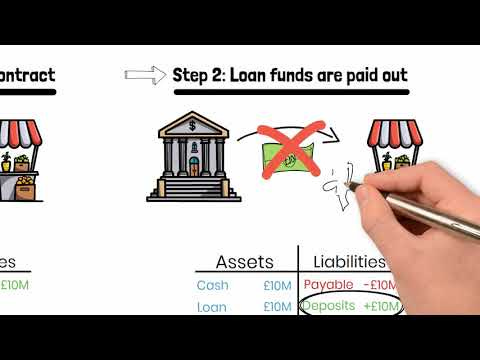
Speaking of which, here’s Professor Richard Werner explaining how banks create money out of thin air (or a few keystrokes on a computer):
What a Brave New World this is going to be.
Post Scriptum
By the way, lest I forget, the author of the above piece is one Dominik Regnat whose affiliation with Börse Online is given as ‘Werkstudent’, or student-intern, whose rah-portin™ on these issues is much better than that of his betters (muahahahaha) in legacy media.
Having entry-level interns or otherwise junior employees do these sooper-serious topics, however, reminds me of the Covid shitshow when equally VIP topics, such as ‘vaccine effectiveness’ (remember that one?) or the like were similarly given to entry-level interns or otherwise junior employees.
My personal guess is that this is done to a) provide plausible deniability (as in, ‘see, we’ve rah-ported™ on the topic’) and b) feed a constant stream of shit sandwiches to the hoi polloi as those few who bother to read such pieces will likely not spend a few minutes to search for the original documents, such as Regulation (EU) 2024/1624 of the European Parliament and of the Council of 31 May 2024 on the prevention of the use of the financial system for the purposes of money laundering or terrorist financing (Text with EEA relevance).
This is virtually the same regulation we talked about at some length concerning the AMLA bureaucracy, and if you’re interested in that a bit more, please see this one:
They have learned nothing, and they will be happy?
Make it pointless to work, invest, save, build. create and people will stop doing that. Instead, we will have the same kind of charming-yet-tragic Black Markets as we did in the days of the East Bloc, and the same kind of planned command economy, in the end:
"Comrade-Distributor, I came to ask when the car I signed up for will be delivered?"
"Ah, Comrade-Citizen, let me see . . . yes, in 2045, 13th of January, 1045 in the am it will be delivered to your domicile."
"Oh no, Comrade-Distributor! That won't work - that's before the Comardes-Constructionists complete the garage in 2052!"
Or something like that, it's an old Soviet joke.
As I mentioned about berry picking and taxes - there's a very low upper limit to how much you may ear. Now, if we get an upper limit to how much cash you can spend in X time, then buying & selling will use different mediums:
Exchange of services, something that simply cannot be properly monitored unless you make it illegal for people do things outside of scheduled and planned corporatestate-monitored places and environments.
Or as my students had to wrap their heads around:
"How much are you willing to make your idea cost, bedire accepting there's something wrong with it?"
The EU has indeed learned nothing and is happy. Isn't that close to the ur-definition of idiot?
What you are describing is very compelling, likely it is the new mechanism put in place to maximize how much money the EU will be able to gather for their new Ponzi scheme, and minimize or eliminate, any escape route available. Christine Lagarde has already warned that if a such escape route exists, people will use it. Therefore, you need all the new powers you can possibly get before you unleash the coming storm on the EU citizenry.
There is no doubt that the EU will effectively transfer part of the private savings in an “investment in Europe”. The proportion of private savings forced in this new “investment opportunity”, is still unknown but a minimum of 10% sounds realistic. Plus, this “investment opportunity” may possibly be repeated over time by the ECB. Now, for the mechanism, it will be done through the issuance of debentures exchanged directly against the assets in cash or, in crypto assets. These debentures will have no secondary market, meaning that holders will be unable to sell them on the open market. These debentures will bear a low fixed interest rate payable once a year by the ECB. The same ECB will be the only agent authorized to buy back these debentures and the ECB may, at its discretion, proceed with a buy back once a year and for a total amount at its discretion. The scheme will trigger a very serious inflation as one of your reader pointed out in a previous posting, explaining the inflation of the Weimar Republic which was the consequence of the issuance of German bonds, equal to 10% of the cash held in bank accounts. There is no reason to believe that the ECB will be able to avoid a very high inflation since this issuance of debentures will be at the EU scale. Just imagine the inflation in a country like Germany, already falling in a deeper and deeper state of permanent stagflation or, the shock on countries like Greece and Bulgaria, who are poor compared to their Northern counterparts.
Consequences? Massive unemployment and inflation, and for the Happy Few, they will enjoy the Cantillon Effect. Those close to the ECB will receive the money gathered and likely, they will purchase hard assets outside the EU. As for the ECB, every time it will proceed with a repurchase of these debentures, the ECB will pay the nominal amount but, the inflation will be so high that the holders will at the end, be receiving next to nothing, payable in digital Euro. Now, it is reasonable to argue that my ramblings are just ramblings and nothing else. Plus, what do I know about important people taking important decision? But it sounds reasonable to think that the EU and the ECB are going in that direction.