
The Science™, c. 2020: Negative Tweets Affect Your (Spatial) Thinking
Thus Tashjian & Galván whose work enquires about the feelings of a self-select, non-representational sample of participants that bears little, if any, relation to reality-as-is

Following up on last week’s amazing example of the myriad ways in which scientific enquiry went sideways, today we’ll talk some more…social media use. And non-use. Read up on last week’s instalment here:

The original is in English, hence I delimit myself to adding some emphases and [snark]. Actually, more [snark] than I intended. Enjoy ^-^
‘Dorsolateral prefrontal cortex response to negative tweets relates to executive functioning’
By Sarah M. Tashjian and Adriana Galván, Social Cognitive and Affective Neuroscience, Volume 15, Issue 7, July 2020, pp. 775–787, https://doi.org/10.1093/scan/nsaa101; publication date: 5 Aug. 2020
Abstract
Cognitive performance can become impaired when a stimulus evokes an emotional response. Social media often elicits emotional reactions, but, despite social media’s ubiquity, cognitive and neural consequences of exposure to negative online content are relatively unknown. Fifty-seven human adults (18–29 years; 38 female [that sample is 66% female]) who identified with at least one historically-marginalized group [it’s time for another edition of ‘grievance olympics’] performed a novel ‘Tweet Task’. While undergoing functional magnetic resonance imaging, participants completed a spatial reasoning task before and after reading a set of actual tweets. Participants were randomly assigned to read negative, discriminatory tweets from President Trump (Negative Condition[ing, I submit]) or neutral tweets (Neutral Condition). [I’m adding a line break here for good measure]
Participants in the Negative Condition reported worsening affect and demonstrated performance interference post-tweet compared to those in the Neutral Condition [so, it you’re a) 2/3 female, b) belong to one (ore more, I suppose) ‘historically-marginalized group’, and c) are on social media seeing Mr. Trump’s utterances, your ‘spatial reasoning’ was off]. Affect post-tweet was associated with parametric reductions in left dorsolateral prefrontal cortex, which predicted variance in performance beyond elicited negative affect. Performance effects were demonstrated on an unrelated spatial reasoning task suggesting that engaging with negative, emotionally-arousing content on social media can have deleterious effects on executive functioning in non-social domains [who would have guessed that seeing/reading something that agitates you affects your reasoning? I mean, this is ground-breaking, breath-taking, and astonishing beyond anything (except for, literally, the entire literature on emotions since Antiquity and except for anything and everything related to psychology and psychiatry ever written)].
Aren’t you intrigued? Isn’t this amazing?
Someone paid for these two people to perform an experiment and write an article about it. Of course, I’m reminded of other nonsensical academic publications—these pages here are literally filled with it—but this one is particularly special.
Here’s the very first sentence of the article:
Social media is increasingly ubiquitous in daily life, but little research has identified neural and cognitive consequences of engaging with emotionally-charged information via social media.
As I said, that may be superficially True™ among those practitioners of the Science™ (and, curiously enough, the peer-reviewers of this piece), but it’s a far cry from accurate.
A New York Times analysis estimated over half of President Trump’s 11 000+ tweets since becoming President involved attacks, with 1421 of those 5889 attacks levied against minority groups and immigrants (Shear et al., 2019) [I’ve added this link here, if only to denote that the original intellectual input (ahem) is (drum roll) a NYT piece, here masquerading as an academic study (the way it is cited)]. This type of negative, emotionally-charged information can interfere with cognitive functioning given its potential to capture attention and reduce resources available for engaging in goal-directed behavior [I submit that this actually worked—by making Sarah M. Tashjian and Adriana Galván write this Study™] (Schmader et al., 2008; Schweizer et al., 2019; Brady et al., 2020). The current study investigated whether consumption of negative, discriminatory social media content affects neural systems needed for executive functioning.
And this is where I short-circuit my reporting on the study™—not because it wouldn’t be, frankly, hilariously absurd (but making me feel more stupid as I read on)—but because there’s something else to consider.
The most pertinent piece of information relevant to the above-discussed study are the following lines from (otherwise highly-recommended) Musa al-Gharbi’s We Have Never Been Woke: The Cultural Contradictions of a New Elite (Princeton UP, 2024) [sidenote: while I disagree with the author’s politics, it’s a timely antidote to the ubiquity of declarative nonsense, such as in the above-related Study™, and while one could (and should) argue about the benefits and disadvantages of the underlying reasoning in the mould of Pierre Bourdieu’s Distinctions, the book is very well worth your time]; the following is from Chapter 4, specifically around pp. 193-4 (references omitted), and it provides a bit of much-needed context to the otherwise blanket statements by authors Tashjian and Galván:
Frequent social media users tend to look a lot like heavy podcast streamers: young, highly educated, and relatively affluent. For virtually all social networks, those with college degrees, with incomes over $75,000, or who live in urban areas are the most likely to use social media— and they tend to engage with these platforms much more frequently than other users. On the whole, those who use social media at all, for any purpose, tend to use it lightly. Most users check in once per day or less. In contrast, roughly 40 percent of those who are urban, are college graduates, or earn at least $75,000 per year say they are “almost always” online. Among users under fifty from these demographics, it is well over a majority.
Let that sink in for a moment: Tashjian and Galván use a sample™ that is highly non-representative (and, apparently, cobbled together by whatever means and intentions):
Fifty-seven human adults between the ages of 18 and 29 years (Mage = 20.895 2.289 years, 38 female) completed the study. Thirty percent of participants identified as Hispanic/Latinx, 21% Asian, 18% Caucasian, 14% Black, 10% multiple races/ethnicities, and 7% Middle Eastern.
I mean, just look at the composition of the sample—even (sic) in a US context, this isn’t representative of anything (other than, say, US college population, roughly speaking):
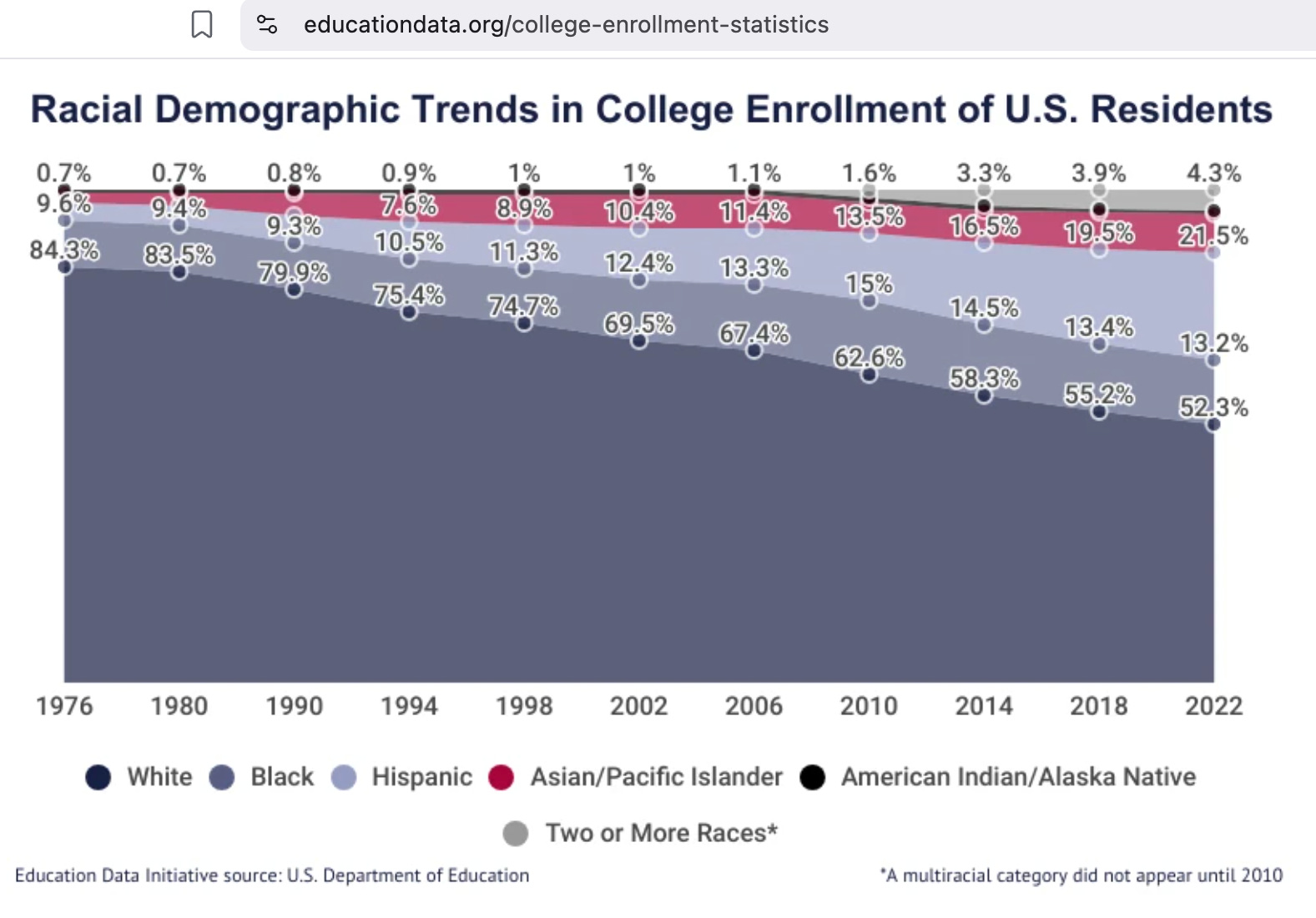
To me, it looks more like the Study™ authors sampled their peers on whatever (urban) college campus, but the main critique I’d offer is best summed up as follows (by al-Gharbi):
Critically, most content that is shared on social media receives few views and even fewer engagements. The median YouTube video, for instance, receives 0 likes, 0 comments, and only 40 views. And across social media platforms, views and engagement of posts have been steadily plummeting, even for large accounts with social media managers and paid campaigns. In short, it is a small subset of Americans who use social media regularly and an even smaller share who produce or engage with content when they do log on. Users who share or interact with political content are even more niche [let that sink in for a moment: there’s nothing in the Study™ referenced above that addresses this fundamental issue].
Among Americans who use social media at all, the overwhelming majority (70 percent) rarely, if ever, post or share content about political or social issues—especially if their views tilt right of center—most commonly out of fear that they will be maligned or attacked for their views, or that their posts will other wise be used against them. Most instead leverage the platforms primarily for entertainment and to connect with family, friends, and others in their local community. Research has found that the type of people who do use social media for political purposes tend to be very different from most others in terms of their dispositions both online and off. They are especially likely to be aggressive and status hungry. They tend to enjoy offending others but are also more easily offended themselves. The more intensely the user base of a site is dominated by symbolic capitalists, the more prevalent users like these seem to be.
What authors Tashijan and Galván have done to cobble together their sample for this study, however, is actually way worse in my opinion, private and professional alike:
Participants were recruited via flyers [I suppose this means handing out flyers near, say, social science buildings on campus]. Thirty-six participants were previously enrolled in a laboratory study on post-election distress (see Tashjian & Galván, 2018).
Note that this ego-reference here is the one study that’s not linked; it’s like Tashjian, S. M. & Galván, A. (2018), ‘The role of mesolimbic circuitry in buffering election-related distress’, Journal of Neuroscience, 38, 2887-2898.’
I’m not looking at this paper, but I’ll add that what Tashijan and Galván have done is no different than in the paper we looked at last week (the one with phone use during dinners): they recycled study participants.
Put together with the facts outlined by al-Gharbi, serious questions about the sample composition arise, in addition to the weird factoid that, based on the roster of people found at the Galván Lab (she’s a Professor of Psychology at UCLA), the people Prof. Galván associates with mostly are (drum roll) urban, college-educated, urban, and female.
I suppose what I’m trying to say is: we need to talk about confirmation bias, to say the very least, too.
And then there is the following listing of apparently very important things for doing such a Study™:
Eligibility for this study was determined based on responses to three prescreening questions including two questions about the personal effect of the 2016 U.S. presidential election and one question about identification with various marginalized identity groups. All participants reported feeling [if that’s not the biggest red flag in terms of pre-existing biases that should have caused the reviewers to voice massive concerns] that the 2016 U.S. election result would personally affect them [also: how does one, scientifically, assess feelings? I mean, there’s no methodology cited, but I’d add that this is the premise (foundation) of the entire Study™], rated affective response to the election as 5 or higher on a scale of 1 = ‘no negative affective response’ to 7 = ‘an extremely negative affective response’, and identified with at least one historically marginalized group in terms of gender identity, ethnicity, or sexual orientation [more absurdity as I’m quite certain that a sizeable share of participants ticked more than one such box, thereby adding another confounder]. In addition to the prescreening questions, eligibility criteria included fluency in English, between the ages of 18 and 30 years, and right handedness [huhum, are left-handed people more or less able?1]. Exclusion criteria included no prior developmental, psychiatric, or neurological disorder; no psychotropic medication; not claustrophobic; and no metal in the body.
Isn’t it amazing that having any mental issue and/or being on psycho-active substances (legal and otherwise) would not exclude you from participating? I personally have no idea as to why ‘no metal in the body’—as in: artificial joints or piercings, as if these are the same—would affect spatial cognition, but, hey, there are experts™ in these things, too.
Let’s mention another thing before wrapping up, though: these absurd and non-scientific sampling methods were used by Tashjian & Galván in their 2018 paper on US election ‘distress’, too (and some of their erstwhile participants were included in the 2020 paper we’re discussing here):
Sixty participants were tested after being deemed eligible to participate based on their responses to three prescreening questions: (1) Do you think the result of the 2016 U.S. presidential election will personally affect you? [again, one’s individual feelings mattered first and foremost]; (2) On a scale of 1 to 7, 1 = no negative emotional response and 7 = an extremely negative emotional response, how do you feel about the result of the 2016 U.S. presidential election?; and (3) What do you identify as your gender, ethnicity, sexual orientation, religion, and immigration status? [compared to the 2020 paper, the authors included more ‘identities’ here] We used these prescreening questions before testing to ensure that we recruited a heterogeneous sample of participants inclusive of those who felt affected and unaffected by the election result [WTF is this? I mean, proverbially, one could call this methodical madness, but I fail to see something that can be reproduced as the foundation is (drum roll) someone’s feelings]. Before testing, participants were assigned to either the affected or the control group, and recruitment was terminated once the predetermined group sizes were obtained. Forty participants were assigned to the affected group (28 female [note that this sample is 70% female, i.e., even more off the sex distribution, with perhaps the exception of certain social sciences on campuses]; Mage = 20.25 years; SD, 2.27; range, 18–28 years). Participants were considered “affected” if they met three prescreening criteria: (1) they indicated they thought they would be personally affected by the election result [note the ‘hedged’ wording of using three (!!!) different relativising terms (‘indicated’, ‘thought’, ‘affected’): how TF would anyone be able to reproduce these results?], (2) they reported an affect rating of 5 or higher [who honestly gives a f*** if you feel more or less ‘affected’? I mean, the main issue is one’s feelings], and (3) they reported identifying with at least one historically marginalized group (Table 1). We also obtained free-response explanations of how participants thought they would be personally affected by the election result to ensure that our pretesting categorization as affected was accurate (Table 2). One additional affected participant was recruited but later excluded because of a technical error during scanning. Twenty participants were assigned to the control group (12 female [that control group (sic) is also 60% female]; Mage = 21.90 years; SD, 2.83; range, 18–30 years). Participants were considered “control” if they met two prescreening criteria: (1) they indicated they did not think they would be personally affected by the election result, and (2) they reported an affect rating of 4 or lower [basically the people who participated and kinda shrugged, it seems; we note, in passing, that this isn’t how one randomises anything].
Basically, we have two studies by the same two (female) authors that use no-randomised samples with a heavy sex bias (60-70% female participants) whose common denominator is (drum roll) individual feelings as they were self-reported on an enrolment questionnaire.
That’s literally the entire foundation of these papers.
For matters of completeness, here’s from the discussion of the 2020 paper:
Results support the hypothesis that negative stimuli experienced through social media evoke negative affect, which relates to neural and executive functioning. Participants exposed to negative, discriminatory tweets reported worsening affect than those exposed to neutral tweets…
This study specifically focused on individuals for whom the negative, discriminatory tweet content was of personal relevance. Results demonstrate that widely read tweets may have deleterious effects on executive functioning in a large segment of the population: historically marginalized identity groups. Importantly, more negative preexisting feelings about President Trump were associated with increased negative affect post-tweet, suggesting preexisting conceptions about underlying subject matter circulated on social media can amplify affective responses to online content. Certain individuals may therefore be more vulnerable to the interfering effects of social media on executive functioning, a hypothesis worthy of continued investigation…
Negative, discriminatory tweet stimuli in this study were emotionally arousing…
Because of the frequency with which younger individuals engage with social media, there is significant potential for daily exposure to content that can limit cognitive and neural resources available for executive control, particularly in those undergoing the final stretch of brain development through the mid-20s. The detrimental effect of this cognitive interference is exacerbated by the fact that emotional online content, particularly that which evokes negative affect, is prone to wider sharing thereby compounding attentional capture (Brady et al., 2020). These findings have important practical implications for arbitrating discriminatory online content that may have deleterious effects on cognition for historically marginalized identity groups.
I read this as: don’t rage-tweet while driving. Or let’s simply ban ‘historically-marginalized identity groups’ from the internet (for safety reasons, of course) to avoid them feeling more distressed.
Or whatever.
Bottom Lines
I cannot fuckin’ believe it.
At first I saw the abstract and thought: well, that sounds stupid. Having read the papers, I’m more convinced that this is absurd.
You know, I’m a professor (of history), and one of the critiques I regularly face is that my discipline is somehow (for lack of a better term) quite ‘soft’ in terms of input, methods, and interpretations.
While these are, admittedly, quite fair critiques (and, no, I’m not one of ‘those historians’ who claims that my field is a ‘hard’ science), but having a pre-defined set of inputs (in my case, e.g., fiscal/tax-related administrative paperwork from the 1700s) and a clearly defined methodical approach to test whatever hypotheses I made against the available evidence is—in my view—a more scientific set-up than these papers.
So, what else is there to say?
Sure, who TF pays for this kind of research™?
And then there’s the what does society get out of such papers?
I mean, at this point, I’d argue that cutting academia by, say, 50% wouldn’t make much of a difference at-all in terms of both academic output of relevance and/or anyones’ lives (but it would reduce the number of BS publications).
As to the data inputs for these two papers, I’ll conclude by citing two more paragraphs from al-Gharbi’s 2024 book (pp. 194-5):
Data collected prior to Elon Musk’s acquisition [i.e., the source of the Tweets analysed™ by Tashjian & Galván] show that, compared with other networks, Twitter (now “X”) users tend to be especially young, educated, urban, and left-skewed. Only about 22 percent of Americans were on Twitter at all (32 percent of Democrats and 17 percent of Republicans)—and just one-quarter of these users (roughly 6 percent of the broader U.S. public) produce 97 percent of the content on the site. Only about 10 percent of users (“power users”) log on daily or almost daily. They are responsible for 90 percent of all tweets and generate more than half of Twitter’s global revenue. Since Musk’s acquisition, the platform has only grown more niche. The daily active user base declined by roughly 13 percent, and the remaining power users account for 72 percent of all time spent on the app.
What Tashjian and Galván studied™, in other words, is a very self-selective and, frankly, decidedly un-representative sub-set of the US population.
Even before Musk purchased it, Twitter was an incredibly political site. According to 2019 Pew Research estimates, roughly one out of every three tweets were political in nature—and it is a very specific subgroup of users who posted this political content. Roughly 70 percent of all U.S. political tweets were produced by college graduates. Along gender lines, 70 percent of political tweets were produced by women. Along political lines, 85 percent of political tweets were produced by Democrats. Ideologically, most political content on Twitter was produced and shared by people who trend toward the extreme ends of the American spectrum. With respect to age, 78 percent of political tweets were produced by users who are fifty-plus years old. Put another way, it is older, female, highly educated, ideologically extreme, and Democratic users who dominated the political discussion on Twitter prior to Musk’s takeover.
What Tashjian and Galván studied, then, are the feelings of engendered by these ‘older, female, highly educated, ideologically extreme, and Democratic users who dominated the political discussion’. In other words: Karen galore, triggering (pun intended) their younger, equally ‘female, highly educated’ and obviously ‘ideologically extreme’ fan girl base hiding out on hip urban college campuses, such as UCLA.
Put succinctly, the only purpose these Studies™ serve—and this is why I’m bothering to write about them in the first place—is that they permit odd glances into the minds of the academic elites in the contemporary West.
We also may extrapolate where this kind of emotionalising nonsense leads to: people who are afraid of the real world, retreating into the allegedly ‘safer spaces’ where, unencumbered by ideas, observations, and opinions they dislike, these elites may pontificate about the equivalent of how angels may be found on a pinhead.
Yet, there being no escape from reality (other than, say, institutionalisation in an insane asylum), they are in for a rather rude awakening before too long.
As an academic these days—but, I’d argue, perhaps more so as someone who doesn’t work in what more and more resembles an asylum—that break of dawn cannot come soon enough.
While I’m by far no expert in these things, I found it relevant to reproduce the following excerpts from Wikipedia:
In his book Right-Hand, Left-Hand, Chris McManus of University College London argues that the proportion of left-handers is increasing, and that an above-average quota of high achievers have been left-handed. He says that left-handers’ brains are structured in a way that increases their range of abilities, and that the genes that determine left-handedness also govern development of the brain’s language centers.[56]
Writing in Scientific American, he states:
Studies in the U.K., U.S. and Australia have revealed that left-handed people differ from right-handers by only one IQ point, which is not noteworthy ... Left-handers’ brains are structured differently from right-handers’ in ways that can allow them to process language, spatial relations and emotions in more diverse and potentially creative ways. Also, a slightly larger number of left-handers than right-handers are especially gifted in music and math. A study of musicians in professional orchestras found a significantly greater proportion of talented left-handers, even among those who played instruments that seem designed for right-handers, such as violins. Similarly, studies of adolescents who took tests to assess mathematical giftedness found many more left-handers in the population.[57]
Left-handers are overrepresented among those with lower cognitive skills and mental impairments, with those with intellectual disability being roughly twice as likely to be left-handed, as well as generally lower cognitive and non-cognitive abilities amongst left-handed children.[58] Conversely, left-handers are also overrepresented in high IQ societies, such as Mensa. A 2005 study found that “approximately 20% of the members of Mensa are lefthanded, double the proportion in most general populations”.[59]
Ghayas & Adil (2007) found that left-handers were significantly more likely to perform better on intelligence tests than right-handers and that right-handers also took more time to complete the tests.[60] In a systematic review and meta-analysis, Ntolka & Papadatou-Pastou (2018) found that right-handers had higher IQ scores, but that difference was negligible (about 1.5 points).[61]
The prevalence of difficulties in left-right discrimination was investigated in a cohort of 2,720 adult members of Mensa and Intertel by Storfer.[62] According to the study, 7.2% of the men and 18.8% of the women evaluated their left-right directional sense as poor or below average; moreover participants who were relatively ambidextrous experienced problems more frequently than did those who were more strongly left- or right-handed.[62] The study also revealed an effect of age, with younger participants reporting more problems.[62]
Science is trying to figure out what is real and true.
Anything else is not science.
That's me quoting from memory what our professor in "Theories of science" told us in the first seminar, right at the start.
And it was a contentious point with many back then already (the usual suspects using pomo relativisms as excuses to call their pet ideas science), inc. in linguistics, semiotics, and so on.
If I were to guess and not just blame the creeping politicisation of academia since the 1970s (Swedish timeline), I'd say that what really opened the floodgates was the IPCC report stating "90% of scientists agree".
In effect, "authority" does it, therefore it cannot be wrong to do it, if it is for a Good Cause.
“Participants in the Negative Condition reported worsening affect and demonstrated performance interference post-tweet compared to those in the Neutral Condition [so, it you’re a) 2/3 female, b) belong to one (ore more, I suppose) ‘historically-marginalized group’, and c) are on social media seeing Mr. Trump’s utterances, your ‘spatial reasoning’ was off].”
From what I’ve seen a lot more than *spatial* reasoning was affected. It’s more like, “If I think of Trump, all reasoning goes out the window. I’m completely unable to perform simple tasks and I reflexively take the opposite view of Trump no matter what it may be.”